Montessori Program Curriculum
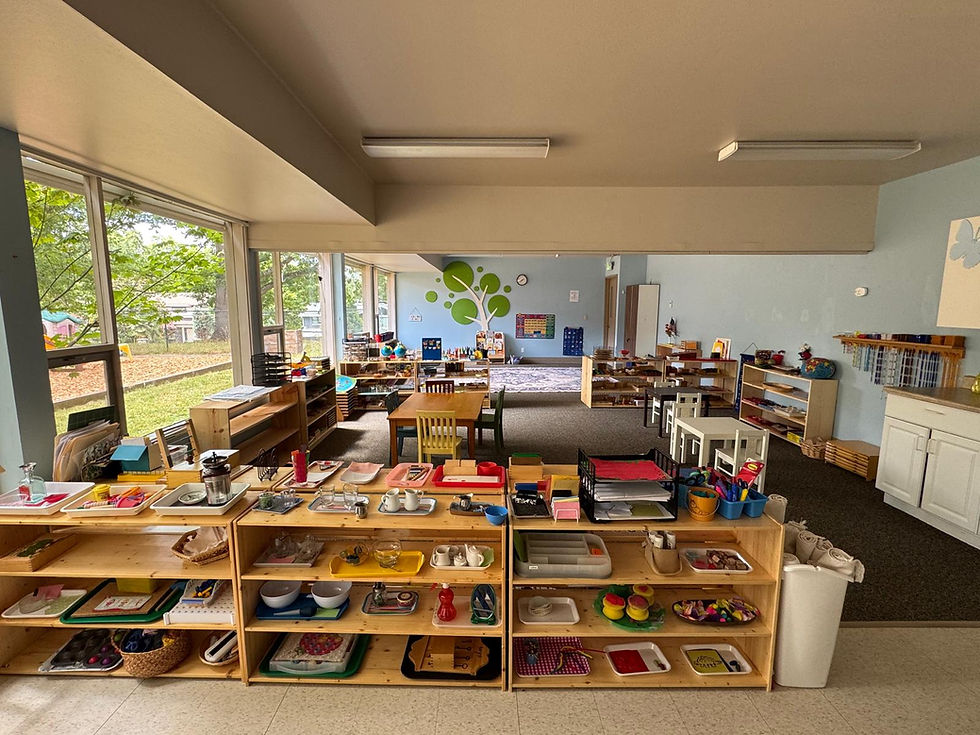
Our early childhood program is designed to nurture independence, confidence, and a deep respect for self, others, and the environment. In the Montessori classroom, children are given the freedom to explore purposeful work while learning the importance of care, responsibility, and self-discipline.
Inspired by the teachings of Dr. Maria Montessori, our prepared environment supports the natural development of children during these important early years. Through hands-on materials and meaningful activities, children build concentration, coordination, problem-solving skills, and a sense of personal responsibility.
Each child is encouraged to take pride in their work, make thoughtful choices, and complete tasks from beginning to end. These experiences help children develop a strong sense of identity, independence, and connection to the world around them.
By engaging in meaningful work, children experience the joy of discovery and the satisfaction of accomplishment, creating a strong foundation for lifelong learning
Schedule Options
During the school year, families may choose from three schedule options designed to support their needs. To maintain the consistency that is essential to the Montessori method, each program is offered Monday through Friday.
Half Day 9:00am to 12:00pm
Full Day 9:00am to 3:00pm
Before School Care. 8:00am to 9:00am
After School Care. 3:00pm to 5:30pm
Tution
Our tuition rates vary based on your child’s program, and schedule. We would be happy to learn more about your family’s needs and walk you through our enrollment options and fee schedules.
We’re committed to making our school as accessible and affordable as possible. Families may be eligible for savings through our family referral program, sibling discount, and employee discount.
Curriculum details
Practical life
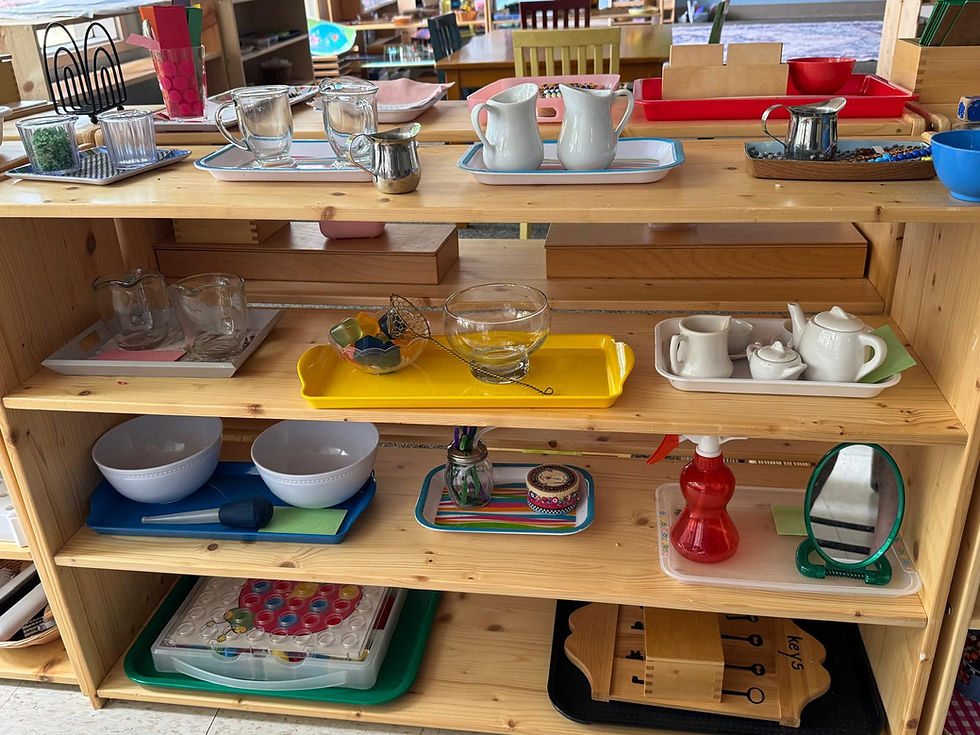
Practical Life activities help children develop independence, concentration, coordination, and responsibility. These lessons are often familiar, everyday tasks that allow children to care for themselves, others, and their environment.
Children may practice pouring, spooning, washing, food preparation, dressing skills, table setting, plant care, sweeping, and cleaning. Through these purposeful activities, children gain confidence, self-control, order, and a strong sense of accomplishment.
Sensorial
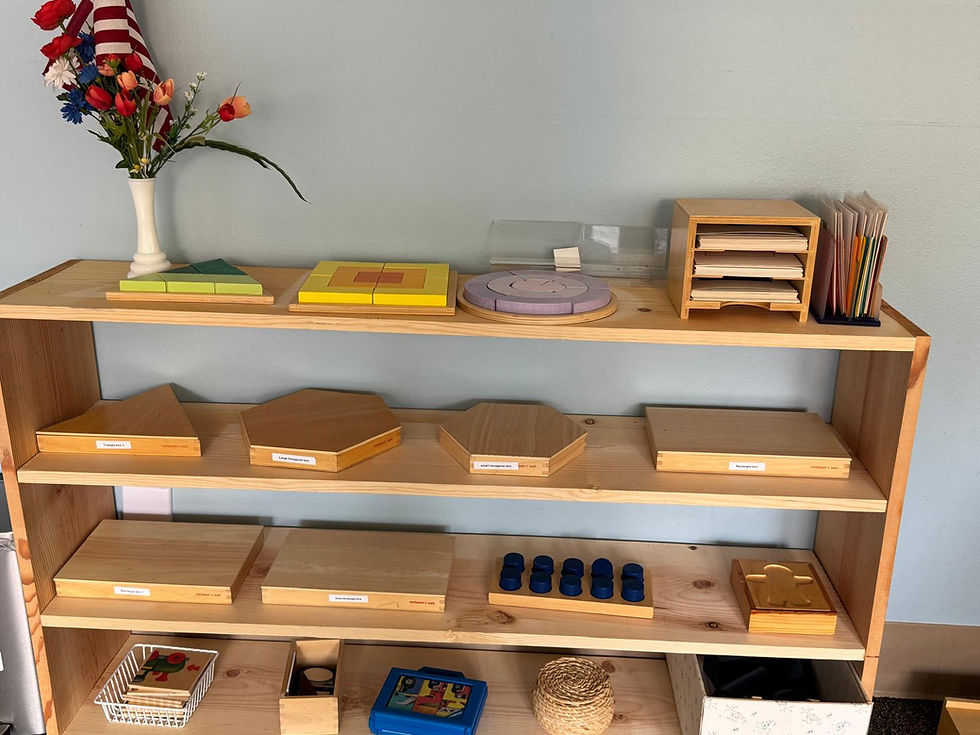
The Sensorial area helps children refine their senses and understand the world around them. Montessori materials are designed to help children compare, classify, and organize information through touch, sight, sound, smell, and taste.
Children explore concepts such as size, shape, color, texture, weight, sound, and dimension. These activities prepare the child for later work in math, language, science, and problem-solving.
Language
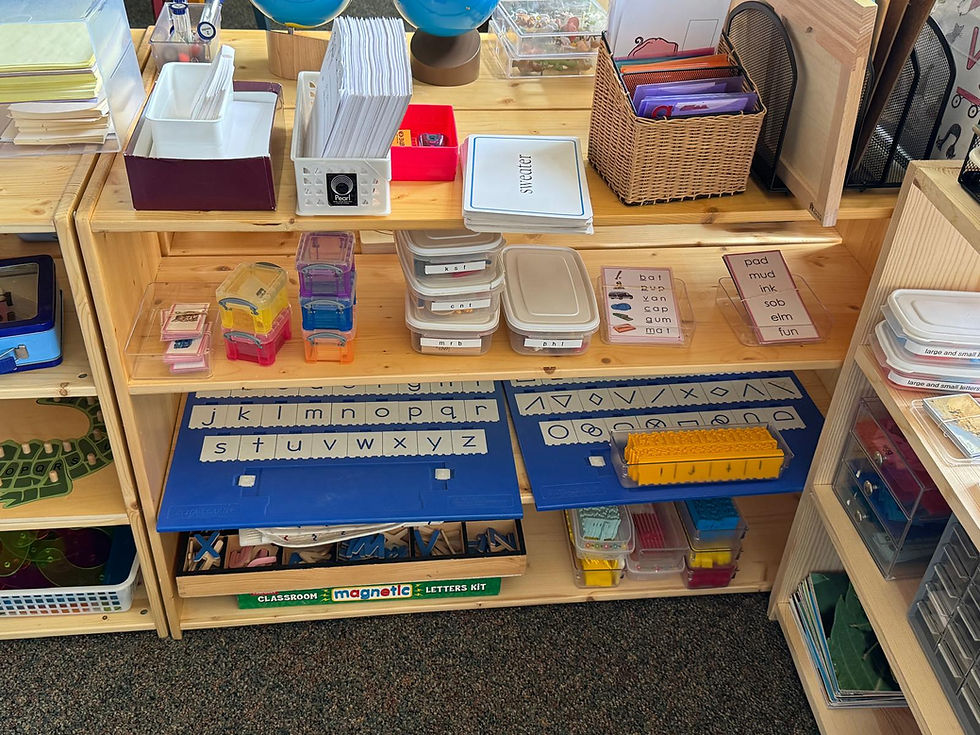
The Montessori language curriculum supports vocabulary development, listening skills, early literacy, writing, and reading. Children are introduced to language through stories, songs, conversations, sound games, and hands-on materials.
They begin by learning letter sounds, building phonemic awareness, tracing sandpaper letters, matching objects to sounds, and forming words. As children progress, they are introduced to writing, reading, grammar, storytelling, and communication skills.
Mathematics
Montessori math materials allow children to understand numbers and mathematical concepts in a concrete, hands-on way. Children first experience quantity before moving toward symbols and abstract thinking.
Activities may include number recognition, counting, one-to-one correspondence, sequencing, the decimal system, addition, subtraction, multiplication, division, patterns, measurement, and problem-solving. These materials help children develop confidence and a strong foundation in mathematical thinking.

Cultural Studies
Cultural Studies introduce children to geography, history, science, nature, art, music, and different cultures around the world. These lessons help children develop curiosity, respect, and a broader understanding of their place in the world.
Children may explore maps, land and water forms, continents, animals, plants, seasons, weather, holidays, traditions, timelines, and simple science experiments. This area encourages discovery, observation, and appreciation for diversity and the natural world.

Art
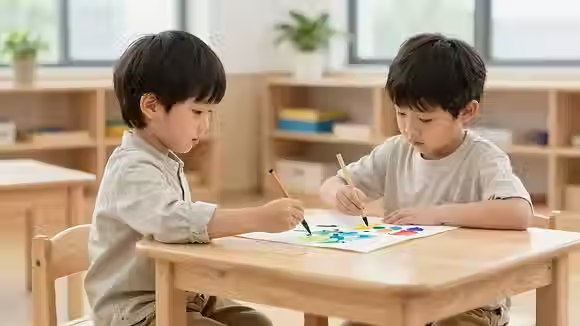
Creative expression is an important part of the Montessori experience. Children are encouraged to explore art and music freely while developing fine motor skills, imagination, rhythm, and confidence.
Art activities may include drawing, painting, cutting, gluing, clay work, collage, and crafts. Music experiences may include singing, movement, rhythm instruments, listening activities, and exposure to different musical styles.
Science and Nature
Science activities encourage children to observe, question, explore, and make discoveries. Through hands-on experiences, children learn about living and nonliving things, plants, animals, the human body, weather, magnets, sink and float, life cycles, and the environment.
Nature-based learning also helps children develop care and respect for the earth through gardening, outdoor exploration, recycling, and caring for classroom plants or animals.
